Crested Butte vs Mt Crested Butte: Which Is Right for You?
May 14, 2026
May 14, 2026
Trying to choose between Crested Butte and Mt. Crested Butte? You are not alone. Many buyers start by comparing price or proximity to the lifts, then realize the real decision is about how you want to live day to day. If you want a clearer way to sort through the tradeoffs, this guide will help you match your goals with the right setting. Let’s dive in.
At a high level, Crested Butte is the historic town-center option, while Mt. Crested Butte is the resort-base option. That one distinction shapes almost everything else, from how you get around to the kind of home you are most likely to buy.
Crested Butte is known for its walkable, bikeable layout, access to Elk Avenue, and proximity to town amenities, the community school, Nordic skiing, and the Mountain Express bus. Mt. Crested Butte sits at the base of Crested Butte Mountain Resort and offers quick access to ski and bike terrain, along with a housing mix that runs from small condos to larger single-family homes.
The two towns are closely connected, but they support different routines. A paved recreation path links Mt. Crested Butte and Crested Butte, so you are not choosing isolation versus connection. You are choosing which lifestyle feels easier to repeat every day.
Before you compare listings, ask yourself a simple question: what do you want your normal day to look like? In this part of the valley, lifestyle fit often matters more than square footage on paper.
If you picture walking or biking to restaurants, shops, and daily errands, Crested Butte usually stands out. The town’s planning documents describe it as pedestrian-first, with a small size and land-use mix that support getting around on foot or by bike.
That said, it is not perfectly car-free. The town also notes that traffic and parking pressure can affect the pedestrian experience, especially on busy streets. Still, for many buyers, Crested Butte offers the strongest “park once and live on foot” option in the upper valley.
Crested Butte also has a distinct historic character. The entire town is shaped by a local Historic District, and it also includes a National Historic District. That helps explain why the streets, homes, and overall feel are so recognizable and why in-town inventory tends to carry a strong sense of place.
If your priority is getting to the lifts fast, Mt. Crested Butte is usually the more practical fit. Crested Butte Mountain Resort has 1,547 acres of skiable terrain, 165 trails, 15 lifts, and a base elevation of 9,375 feet, and Mt. Crested Butte puts you closest to that base-area experience.
This setting also tends to feel more resort-oriented. Dining and activity options cluster around Mountaineer Square and the base area, and transit is built into daily life. Mountain Express provides free transportation throughout Crested Butte and Mt. Crested Butte, and Mt. Crested Butte also offers on-demand rides within town.
For some buyers, that convenience is the whole point. If you want to maximize ski access and keep the resort close at hand, Mt. Crested Butte can make ownership feel very efficient.
One of the best ways to compare these two places is to think about transportation. Not just how you arrive, but how you move through a normal winter weekend or a mid-summer Tuesday.
Crested Butte is well suited to buyers who want a traditional town routine. You can often walk or bike to the core, and the town’s planning framework is built around that pedestrian-first identity.
The Nordic lifestyle is also a real part of daily life here. The Crested Butte Nordic Center says it maintains about 25 to 40 kilometers of marked trails around the edge of town and notes that the center is within walking distance from almost anywhere in town. The free shuttle and bus also stop outside the Nordic Center.
That mix of trail access, historic streets, and downtown convenience gives Crested Butte a year-round village feel. If your ideal day includes coffee, errands, dinner, and trail time without much driving, this side of the comparison deserves a hard look.
Mt. Crested Butte works differently. Here, transit convenience is tied closely to the resort and the base area, with key hubs including Old Town Hall, the 4-Way in Crested Butte, and Mountaineer Square.
Winter operations also play a bigger role in ownership. The town says there is no parking on any street in town during snow-removal operations, and vehicles parked in the right of way can be towed. That may sound like a small detail, but it can shape how you think about guest parking, condo rules, and winter logistics.
If you like a more structured, managed environment, that may be a benefit. If you prefer a looser in-town feel, it may point you back toward Crested Butte.
The type of home you want may narrow the decision quickly. These two markets do not offer the same inventory mix.
Crested Butte is known for older in-town homes, character properties, and limited supply in the historic core. Buyers are often balancing charm, location, and scarcity against lot size, newer finishes, or larger floor plans.
Gunnison County reappraisal documentation shows single-family sales in the historic-core area ranging from about $1.64 million to $5.23 million during the 2022 to 2024 study period. That range is a reminder that even older homes in prime in-town locations can command significant prices.
In practical terms, the best in-town locations are often smaller, older, and harder to find. If your priority is being close to the town core, you may need to compromise on size or newness.
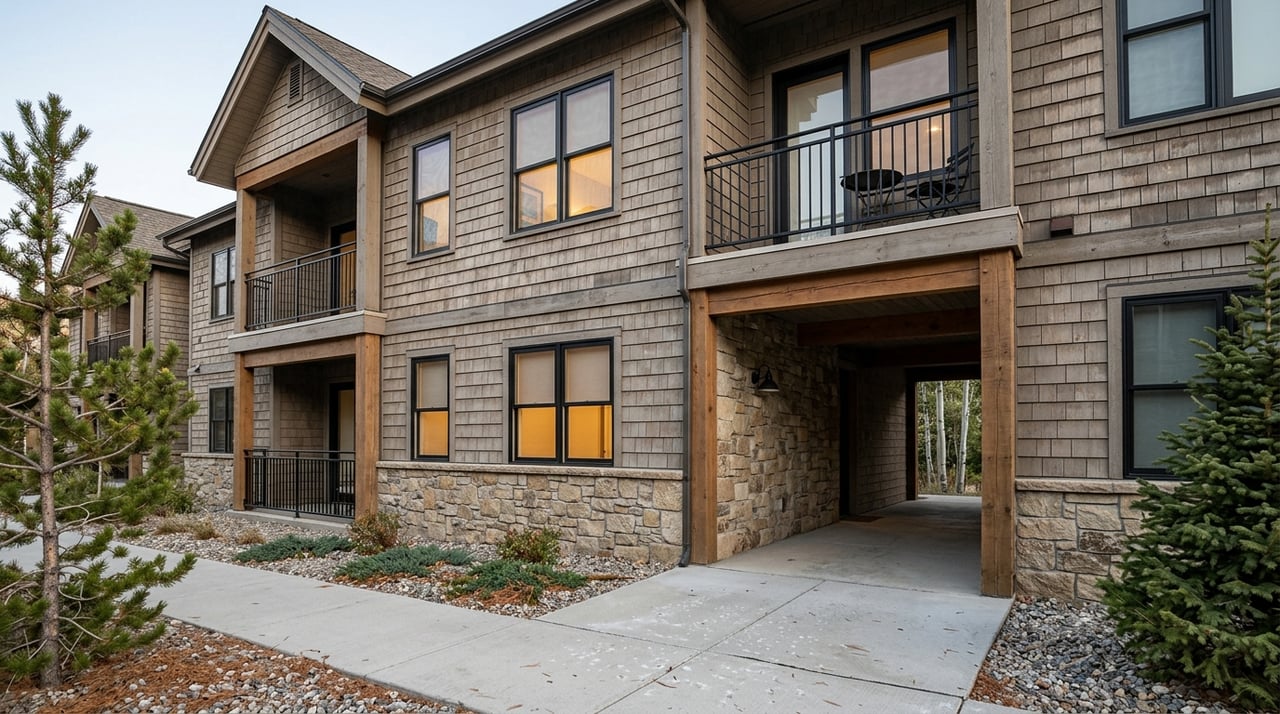
Mt. Crested Butte has a more condo-heavy and resort-driven housing mix. County condo sales documents describe buildings that may include front desks, hot tubs, elevators, indoor parking, ski storage, and in some cases ski-in, ski-out access.
Representative sale prices in those county documents range from the low $200,000s to more than $1.4 million, depending on building, size, condition, and access. A 2024 county and town market report presented to the Crested Butte Town Council showed North Valley median asking prices of about $785,000 for condos and townhomes and about $2.946 million for single-family homes, with an overall North Valley median asking price around $1.295 million.
That same report noted that 26 North Valley listings were condos, and all but four were in Mt. Crested Butte. It also noted that these condo and townhome listings were built primarily for part-time occupancy, with HOA fees above $500 per month.
This is where the decision often becomes clear. Are you buying for full-time use, a second home, rental income, or some mix of all three?
If you plan to live here full time, Crested Butte often appeals to buyers who want a town rhythm and easy access to the civic and commercial core. The Chamber highlights close access to Elk Avenue, the community school, town amenities, and transit to the mountain.
Mt. Crested Butte can still work for full-time owners, but the experience is usually more resort-centered. If you want your home base to revolve around lift access, mountain recreation, and condo-style convenience, it can be a strong match.
If rental use is part of your plan, local rules are important. Mt. Crested Butte requires a short-term rental license for any property advertised or rented for 29 nights or less. The town says there is currently no limit on the number of STR licenses, the new-license fee is $275, and the annual renewal fee is $200.
Crested Butte is more restrictive. A 2024 town staff report says Crested Butte is the only jurisdiction in the valley with a regulatory cap on the number of short-term rentals. As of early April 2024, the town had 206 active licenses, including 188 unlimited licenses out of a 198-license cap, and it also has a primary-occupancy license structure.
That difference can be significant if income potential or flexibility matters to you. It is one of the clearest policy distinctions between the two towns.
If you feel torn, focus on the daily experience you want most. In many cases, the answer is less about which place is “better” and more about which one matches your ownership style.
On paper, Crested Butte and Mt. Crested Butte can seem close enough to feel interchangeable. In real life, they often attract buyers with very different routines, priorities, and expectations.
That is why this comparison is best handled at the property and block level, not just the zip-code level. The right fit depends on how you balance walkability, ski access, maintenance, HOA structure, rental goals, and the kind of setting you want to come home to.
If you want help sorting through those tradeoffs, Jennifer O'Brien can help you compare neighborhoods, property types, and ownership strategies across the upper valley.
Stay up to date on the latest real estate trends.

Our energy and enthusiasm shine through in our work for buyers and sellers. We know that listening is the best way to understand our client’s needs and we work with an unrivaled sense of personal commitment to producing results.