Buying a Historic Home in Crested Butte? What to Know
August 20, 2026
August 20, 2026
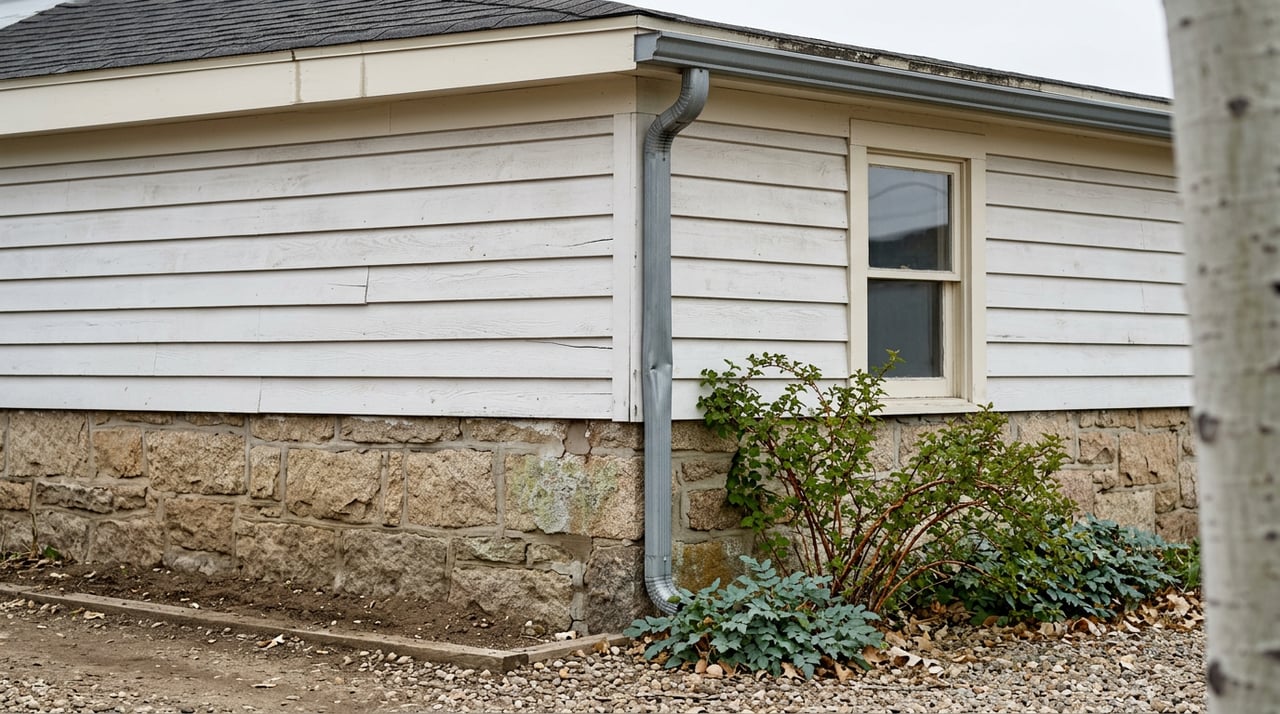
In its year-end review of 2024 projects, reported by the Crested Butte News in December 2025, the town's design review board gave an honorable mention to a small accessory building at 505½ Second Street. The building wasn't historic. The board said so directly. What it praised instead was that the building's owner, Bonnie Priest, had preserved it anyway, including a small outhouse attached to the structure, as a model for what the town hopes to protect next.
That's the detail worth sitting with if you're looking at an older home in Crested Butte right now. The town isn't just enforcing historic rules. It's actively redrawing which buildings those rules apply to, on two fronts at once, in real time. A house that looks like a straightforward remodel candidate this month could be sitting inside a newly protected boundary by the time you're ready to pull permits. Or a house currently locked into townwide design review could find itself outside the tightened boundary and freer than it's been in decades. Either way, the ground is shifting under any purchase decision built on "is this house historic" as a yes-or-no question.
The Town of Crested Butte has regulated the architectural style of every building in town since 1970, protecting structures built between 1880 and 1952, a window the town calls the Coal Mining Period of Significance. That's the baseline anyone buying in the historic core already knows about.
What's changed is the town adopted its first formal Historic Preservation Plan in December 2024, and the plan does two things that pull in different directions. First, it shrinks the local historic district from covering the entire town to tighter buffers drawn around the National Historic District boundary, meaning some properties currently under design review scrutiny may soon face less of it. Second, it adds an entirely new protected category: an "Early Recreation Era" period of significance covering buildings from 1961 to 1984, meant to capture the ski-town architecture that followed the mining era. The town hired a consultant to conduct windshield surveys of every building constructed between 1953 and 1994 to figure out which ones qualify, weighing floor area, massing, exterior details, secondary structures and how much a building has already been altered.
So a 1970s A-frame that reads today as a dated remodel candidate is precisely the kind of structure this survey is built to catch. A mining-era cottage sitting outside the new tighter buffer might be the one getting more room to breathe. Neither status is fixed.
The process itself is concrete enough to plan around, and a February 2026 case file makes it easy to see in practice. Property owner Robert Harper brought plans to rehabilitate a historic building and add a new accessory dwelling at 322 Maroon Avenue, working with designer Jim Jose. The application had already been continued once, from a November 2025 hearing to February 2026, while the board and a Design Review Committee worked through details like whether a specific window on the west elevation was original enough to require preservation, and whether the primary building needed to be lifted and shifted five feet east to satisfy fire code. The board ultimately supported the project against a specific list of numbered guidelines covering original footprint, significant features, window and door standards, and site landscaping.
That level of specificity is normal for anything touching a historic structure in this town, and the calendar around it is fixed and public:
Run the math on that sequence and a routine historic rehab is a minimum two to three month process before a shovel goes in the ground, longer if plans get sent back for revision the way Harper's were. That's not a number that shows up on a listing sheet, but it's the number that determines whether your renovation budget survives contact with reality.
Here's a detail that hasn't made it into most conversations about buying historic in Crested Butte: the Town of Crested Butte's Historic Preservation Plan includes a commitment to create a stabilization and maintenance incentive program in 2026 specifically to help owners rehabilitate historic outbuildings and convert them into accessory dwelling units or small-scale commercial space. Nobody's put dollar figures on it publicly yet. But the direction is clear from how the town has already been rewarding this exact behavior. The honorable mention at 505½ Second Street wasn't for the main house. It was for preserving a modest outbuilding and its attached outhouse rather than tearing them down.
If you're evaluating a historic-core property with a detached shed, garage, or old workshop on it, that structure may be worth more to your plans in eighteen months than it looks today, especially paired with David O'Brien's read on what's structurally feasible to convert versus what needs to come down.
Crested Butte isn't a market where you can simply wait for a better lot to come along. As of a February 2026 council work session, the town's community development director told council there were only 45 vacant single-family lots, 10 vacant multi-family lots and 21 empty commercial parcels left in the entire town, and the town has averaged about seven new construction projects a year over the past decade. That scarcity is exactly why remodeling and rehabbing the existing older housing stock isn't a niche strategy here. For a lot of buyers, it's the only strategy.
Which means the question isn't whether you'll eventually deal with a building that falls under one of these periods of significance. It's whether you understand, before you write an offer, which side of the moving line your target property sits on, and how long the design review calendar will actually take once you own it.
Before you get attached to a listing in or near the historic core, it's worth asking a few questions that most buyers never think to ask until they're already under contract. Was the home built between 1953 and 1994? If so, it may currently be part of the town's ongoing survey for the new Early Recreation Era district, and its design review status could change before your closing date does. Is it inside the current townwide historic boundary but near the edge of what the National Historic District buffer will eventually define? That edge is exactly where the most flexibility is likely to open up. Does the property have a detached outbuilding, shed, or accessory structure? That may become the most valuable square footage on the lot once the 2026 incentive program takes shape.
None of this shows up in a standard listing description, and it's not the kind of thing an out-of-area buyer finds by scrolling comparable sales. It's the kind of read that requires knowing which BOZAR meeting an application is likely to land on, and whether the guidelines a board cites in its findings are the ones that make a project routine or the ones that make it a fight.
If you're looking at an older home in Crested Butte and want to know where it actually sits relative to these moving lines, before you write an offer rather than after, that's exactly the conversation to have with The O'Brien Group. Search All Homes and let's talk through what a specific property's design review path actually looks like.
This article is general information, not legal, tax or financial advice. Consult a qualified professional about your situation.
Stay up to date on the latest real estate trends.
Our energy and enthusiasm shine through in our work for buyers and sellers. We know that listening is the best way to understand our client’s needs and we work with an unrivaled sense of personal commitment to producing results.